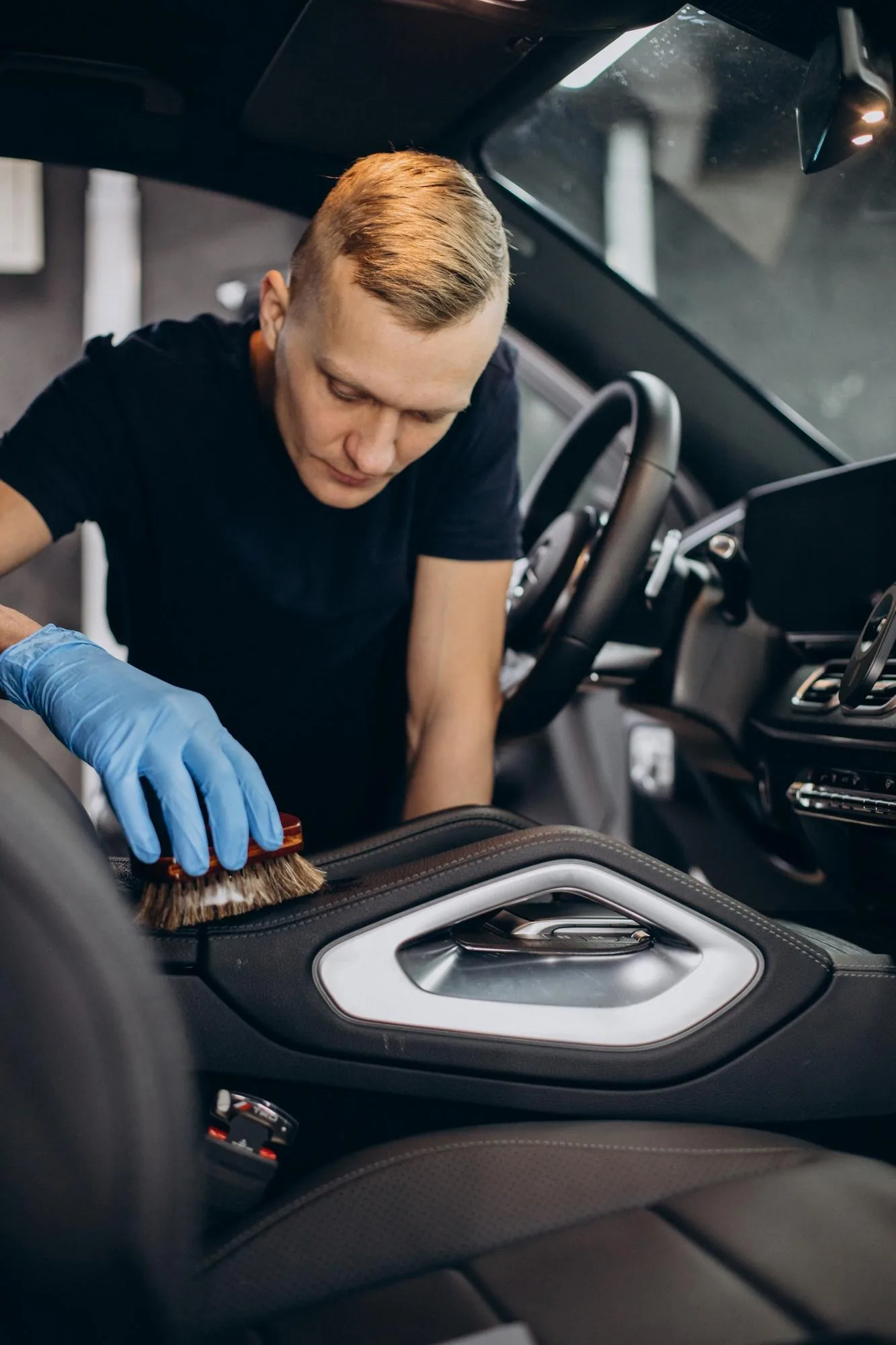
How we think about our work
Care taken before
work begins.
A set of working values that shape how we approach every vehicle — not as statements on a wall, but as habits we hold ourselves to in the bay.
Back to homeFoundation
What we built this around.
Void Shield Loop started from a simple frustration: vehicle care that looks thorough from the outside often cuts corners that matter — preparation steps skipped, fits that are close enough but not right, prices that shift once you're already in the chair.
We wanted to work in a way that felt honest to us and straightforward for the people who brought their cars in. That meant taking more time per vehicle, being clear about cost before starting, and measuring things properly rather than approximating.
None of that is complicated. It's just a set of choices we keep making, consistently, across every job.
Honesty first
We tell you what we find, not what generates the most work.
Time given properly
Each job gets the hours it actually needs, stated upfront.
Your car, specifically
Not a generic template. Fitted and measured to your model.
Lasting over looking
Results that hold up over months, not just the day of collection.
Philosophy & Vision
We think vehicle care works better when it's slower.
The modern service model tends to favour throughput. More cars per day, more services per visit, faster turnaround. That model works well for the business running it — and sometimes it's fine for the owner, too, when the need is basic and the standard is genuinely sufficient.
But a lot of vehicle care that's supposed to protect or improve a car falls short because the time to do it properly wasn't there. Edges not sealed. Paint not decontaminated. Mats cut to a shape that approximately fits. The result looks similar at first. Six months later, it doesn't.
Our view is that slowing down — one car at a time, one proper assessment, one honest conversation about what's actually needed — produces work that holds. That's what we're trying to do here.
Core beliefs
What we actually believe about this work.
Not principles for a brochure — things that change how we behave in the workshop.
Belief 01
Preparation is the job, not the preamble.
Most of what determines how long a surface treatment lasts happens before the product goes on. Decontamination, surface condition, edge preparation — these are the job. The application is the last step, not the only one.
Belief 02
Fit matters more than finish at first glance.
A mat that fits looks the same as one that doesn't for about a week. After a month of use, the difference is obvious — one stays flat and cleans easily, the other shifts, bunches, and traps dirt in the gaps. Fit is a practical thing, not an aesthetic preference.
Belief 03
An honest assessment is worth more than a sale.
If we look at a car and the paint doesn't need decontamination, we won't suggest it. If a simpler service would do, we'll say so. A customer who gets good advice and comes back is more valuable than one we oversold once.
Belief 04
The conversation before the work matters.
Walking around a car together and talking through what we'd address changes the nature of the whole visit. It means the owner understands what's happening, the cost is agreed before anything starts, and there are no surprises at collection.
Belief 05
Care notes extend every service we do.
The way a car is maintained after a service can easily double or halve how long that service lasts. Handing over plain-language notes at collection costs us five minutes and changes the owner's result meaningfully over the following year.
Belief 06
Pressure doesn't belong in a workshop.
A service visit shouldn't feel like a negotiation. We don't offer tiered upsells or suggest things because they're on a checklist. What we recommend, we recommend because we see a reason for it on the specific car in front of us.
In the workshop
How these beliefs show up in practice.
Values only mean something if they change behaviour. Here's what ours look like when a car comes in.
We assess the car with the owner present.
Before any work is scoped or priced, we walk around the car together. We point out what we see, explain what it means, and let the owner decide what they want to address. No hidden notes, no internal checklist that appears on the invoice later.
Price and scope are confirmed before work begins.
We agree on what's being done and what it costs before anything starts. If something unexpected comes up during the job, we get in touch rather than just adding it to the bill.
Preparation steps are treated as core, not optional.
Decontamination, surface cleaning, edge work — these aren't add-ons. They're part of doing the job in a way that lasts. We include them because skipping them changes the outcome, not because they pad a service list.
Every car leaves with care notes.
At collection, we walk through what was done and hand over written notes — what to avoid, how to clean, what to look for. Written for the owner, not for another technician. It takes a few minutes and it changes what the owner can do with the work we've put in.
The individual
Each car gets its own assessment.
A five-year-old daily driver has different needs from a weekend car that's rarely in the rain. A family vehicle with two children and a dog is a different situation from one owned by a single driver who keeps it garaged.
We don't run the same checklist for every booking. The walk-around is how we find out what's actually relevant for the specific car and owner in front of us. What we suggest comes from that, not from a service menu.
This means some visits result in less work than the owner expected. We're comfortable with that. A correct assessment is more useful than a long service list.
We ask about how the car is used, not just what the owner wants done
Material samples for mats and covers are offered so the decision isn't made from a catalogue image
Coverage options for protection film are explained clearly so owners can choose what suits their routine
If a simpler or cheaper option would serve just as well, we say so
How we improve
Changing things when there's a reason to.
We're not trying to be traditional for its own sake, and we're not chasing every new product or technique that comes through either. When we change how we do something, it's because we've seen evidence that the change produces a better result — not because something is newer or sounds more impressive.
Materials
We update the materials we use when we find something that holds up better in practice — not on the basis of marketing claims.
Process
Our preparation and fitting steps have evolved based on what we've seen fail over time. The current process reflects what we've learned, not what we started with.
Communication
How we explain things to owners has changed. Care notes, for instance, started as verbal and became written because owners retained more and maintained better.
Integrity & transparency
We'd rather lose a job than give you wrong advice.
On pricing
The price on the services page is the price you pay for standard scope. If your vehicle needs preparatory work that's outside the standard — significant paint damage before film application, for instance — we tell you that before starting and give you the figure first.
On recommendations
If we look at a car and a service won't produce a meaningfully better result — because the surface is already in good condition, or because the car's age makes it a low-priority investment — we'll say so. We're not interested in billing for work that doesn't justify itself.
On results
We're honest about what our services do and don't do. Protection film slows surface damage; it doesn't make a car invulnerable. Custom mats last longer and fit better; they still require cleaning. We'd rather set realistic expectations than oversell and disappoint.
Working together
The visit is a conversation, not a transaction.
We find that the best results come from owners who understand what's being done and why. Not because they need to be technically informed — most people aren't, and that's completely fine — but because when people understand the reasoning, they maintain their car in ways that extend the work.
The walk-around, the care notes, the explanation at handover — these are all part of the same idea. We're doing this together, not performing a service at someone.
You see what we see
The assessment walk-around means you know the condition of your vehicle and why we're suggesting what we're suggesting. Nothing happens behind closed doors that doesn't get explained.
You choose the scope
We suggest, you decide. If you'd rather start with one service and see how it goes before committing to more, that's a reasonable approach and we'll support it.
Questions are welcome at any point
Before, during, or after. We're easier to reach than most workshops and we'd rather answer a question than have someone unsure about what was done to their car.
Long-term thinking
We're more interested in what happens in two years than tomorrow.
Every decision about how we do a job — how much time we give it, which preparation steps we include, how we seal an edge, what we put in the care notes — is made with the question: will this still look right in eighteen months?
That framing changes a lot of smaller choices. It's why we don't skip decontamination when a surface looks clean to the eye. It's why we measure mats rather than cut to the nearest standard. It's why we write care notes rather than give a verbal rundown at the door. Short-term results are easy to produce. Lasting ones take a bit more intention.
4–6 hrs
proper time for full detailing
1–2 wks
for custom mat production
Multi-yr
film lifespan when fitted well
For you
What all of this means when you bring your car in.
The practical shape of a visit with us, based on the values above.
You'll know what we recommend and why
The assessment is done with you, not handed to you as a service list.
The price won't change once work starts
What's agreed before we begin is what's on the invoice at collection.
The work is done with your specific vehicle in mind
Measured, fitted, and prepared for your car's actual condition — not averaged across similar models.
You'll leave with notes to maintain what we've done
Plain language, specific to the service. Not a generic leaflet.
Get started
If this approach sounds like what your car needs, we'd like to hear from you.
No commitment required to get in touch. A message about your car and what you're thinking is enough to start a conversation.
Send a message